


Steel beams are a sturdy and versatile component for any construction project, but do you ever look at a half-finished building and wonder, how are they actually connected? STEELO is the leading supplier of structural steel in London, and in this blog we are going to break down how steel beams are connected during construction projects.
Steel beams are most commonly connected by:
- End Plates: these are welded onto the end of a beam, providing new connection points
- Fin Plates, or Tabs: these are part of a steel beam’s fabrication, sticking out like a fish fin and providing new connection points
Steel beams themselves are not typically welded together; they are, instead, bolted together.
Keep reading to learn more about End Plates and Fin Plates, how they are used, and how they support steel structures in modern construction.
Steel Beam Connections Explained
Below is a breakdown of all the core types of steel beam connections.
What is an End Plate?
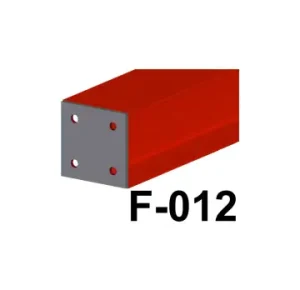
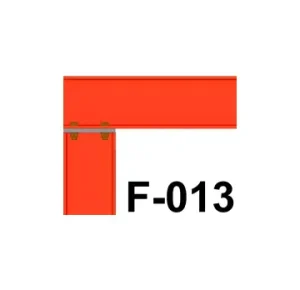
| An end plate is a flat, rectangular sheet of steel with bolt holes drilled into it.
These sheets are welded to the ends of steel beams to provide new bolt holes and connection points. This is a particularly effective method for creating right-angled connections between beams and columns. |
  |
What is a Fin Plate, or Tab?
| A fin plate, or tab, is a flat sheet of steel with bolt holes that sticks out from the body of a steel beam.
They can be fabricated as a part of the steel beam, or welded on at a later point. Tabs are popular on hollow section steel beams, where flat connection points can be unstable. |
 |
What is a Base Plate?
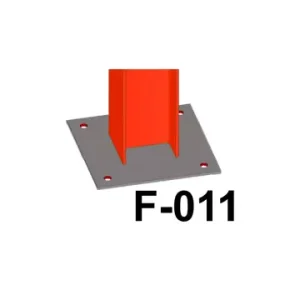
| A base plate is a wide flat steel sheet with connection holes away from the centre.
Base plates are welded to the bottoms of columns, giving them a footprint-like shape that provides extra support for load-bearing pillars. When covered by concrete, base plates create a balancing anchor for steel structures. |
 |
What is a Cleat?
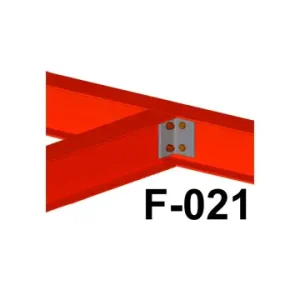
| Cleats are right-angled steel components with bolt holes in both sides.
They are used for connecting steel beams into the sides of other steel beams. Cleats can be welded into place, especially when only one side needs bolting. |
 |
What is a Splice Connection?
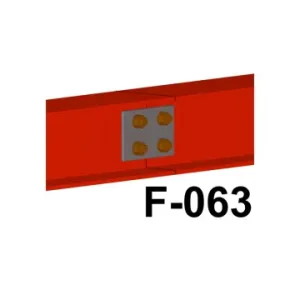
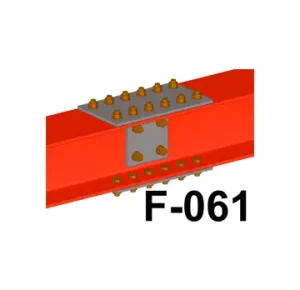
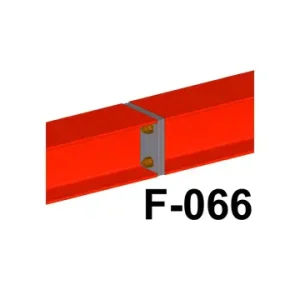
| Splice connections are used to create longer steel beams out of smaller steel beams, end-to-end.
In some cases, full-strength splices are not required (such as F-063). Otherwise, structural engineers may recommend additional inner and outer flange plates to provide extra support (such as F-061). Splices are also useful for meeting height requirements, as is the case of F-066 where a few extra millimetres can be added using a splice. |
   |
Steel Connections for Any Construction Project with STEELO
If you would like more information about the various types of steel connection, check out STEELO’s range of connections for steel beams. STEELO is the leading fabricator and supplier of structural steel in London, offering an extensive selection of products from steel beams to structures to finishes.
If you still can’t find what you’re project needs in our catalogue, get in touch to discuss a more bespoke fabrication job.
Advantages & Uses of Steel FAQs
How are steel beams attached?
Steel beams are attached to one another in a number of ways, but primarily they are bolted together. There are a number of attachments to—and features of—steel beams which provide connection points for bolting, and the specific type of bolt used is also important for strong binding.
How to join two steel beams together?
To join two steel beams together, ensure that they feature connection points (holes for bolts) at the exact correct positions for your project, and then use bolts to attach them together.
You may need to use different joining methods based on the type and shape of steel beams you are using, opting for steel connectors depending on their uses:
- End Plates are good for connecting steel beams at right-angles
- Fin Plates, or Tabs, are good for Hollow Section steel beams
- Base Plates allow for structural balance
- Cleats are good for joining into the side of a beam
- Splices are good for extending steel beams by connecting multiple end-to-end
How are steel beams assembled and connected on site?
On a construction site, steel beams are assembled into structures using specialist equipment such as:
- Steel beam lifters
- Cranes
- Tracked crawler handlers
- Specialist handler jibs
The company fabricating the steel beams is not always the same company assembling them on-site, so make sure to understand who is responsible for assembly before your project gets underway.
STEELO fabricates and supplies steel structures and individual steel beams. Get in touch to learn how we can support your project.
 Get in touch